
This ’90s Home Lighting Trend Is Finally Out — Here’s What’s Replacing It
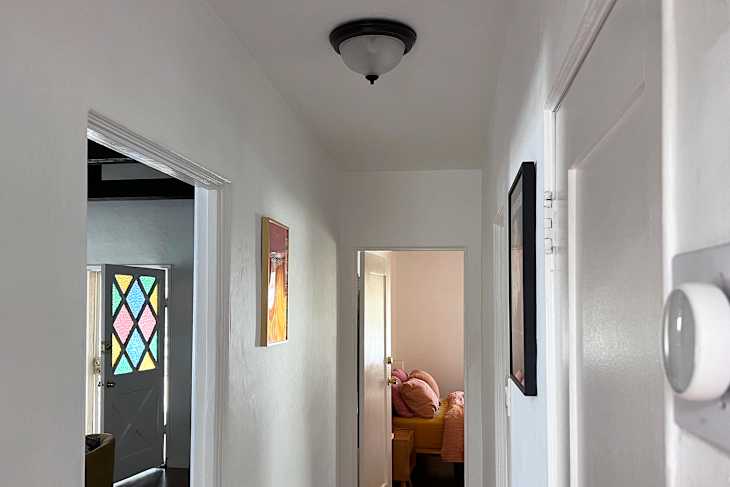
You know it. You may even hate it: cold and impersonal builder-grade lighting. It’s everywhere. From recessed can lights that dot every ceiling to the infamous “boob light,” a glass dome fixture resembling breasts, you’ve likely lived in a home with builder-grade lighting at least once. If you have one in your home, you recall twisting it off every time you replaced the bulb.
But real estate agents and designers are starting to see builder-grade lights, especially recessed can lighting, disappear, and when sellers don’t upgrade, buyers are investing more in the lighting they love, says New Jersey Realtor-Associate Elizabeth Callaghan of DeFeliceRealtyGroup.
But if you’re looking at a home with builder-grade lighting fixtures, that doesn’t have to be a bad thing. “When sellers stick with basic, builder-grade light fixtures, it gives buyers the perfect opportunity to personalize their new home,” Callaghan says. “Swapping out standard fixtures for ones that match their style — whether modern, rustic, or elegant — can instantly transform a space and make it feel more like their own.”
What Types of Builder-Grade Lighting Are There?
Owner and principal of Terri Brien Interiors, Terri Brien, who managed a residential builder’s design studio for 19 years before opening her design firm, is all too familiar with the builder-grade lighting that “screams ‘builder-basic’ used in value engineering.”
“As production-based builders focus on speed and volume to meet the demand for homes, design-forward features often fall by the wayside,” Brien says. She points out that flush mount disc lights — which are ceiling lights with flat disc-shaped covers — and recessed can lights, usually 6 inches with white or black painted baffles, scream builder-grade.
Additionally, flush ceiling dome lights — aka the boob light — are another common builder-grade lighting type, as are vanity bar lights, those fixtures installed above bathroom sinks that feature a long bar and three or more exposed bulbs covered with frosted glass.
Why Was Builder-Grade Lighting So Popular?
In the late ’90s and early 2000s, recessed lighting in particular became a staple in modern interiors as LED technology evolved and minimalism took center stage in home design.
Recessed lighting soared in popularity with the trend of minimalist interiors that featured a sleek, modern aesthetic and minimized visual clutter. Installed flush with ceilings, the lights made rooms feel more spacious, notes Preston Butler of Butler Lighting. Recessed lighting also gained popularity in commercial spaces and upscale residences during the mid-20th century with the production of smaller fluorescent bulbs.
“Combined with improvements in LED technology and lower costs, recessed lights became a go-to for home builders and designers,” Butler adds. But he’s seeing them disappear. “With a swaying interest in more colorful, unique designs and fixtures, builders and designers are pulling back from recessed lighting in favor of unique, statement pieces,” Butler says.

What’s Replacing Builder Grade Lighting?
This year, homeowners are ditching these impersonal, cookie-cutter fixtures in favor of lighting that reflects warmth, sustainability, individuality, and a “cozy vibe.” According to Zillow’s latest trend report, “Whole-home batteries, cozy living, and home libraries are emerging home trends in 2025.” Listings mentioning “cozy” increased 35% more than last year.
Buyers are replacing their builder-grade lighting with options that are sustainable, layered, sculptural statements, or have natural textures or organic shapes.
Sustainable Lighting
Eco-conscious homeowners seek sustainable lighting options made from nontoxic materials that are gentler on humans, pets, and the planet — and manufacturers got the memo. They’re looking into durable fixtures with longer lifespans and trading harmful substances for biodegradable materials, such as bamboo, rattan, wood, and recycled glass, explains Alissa Becker, design manager at the Statesman Group.

Layered Lighting
Layered lighting blends ambient, task and accent lighting to create visual harmony and balance throughout a home. (Think pendants, chandeliers, table and floor lamps, LED strips and sconces, replacing bathroom vanity bar lights.)
Real estate broker Baron Alloway of Alloway Property Group also said he’s seen a growing trend in layered lighting, as more spaces become combined. “Lighting for a dinner party and a Sunday afternoon football game can give the same space two very different feels, creating two [distinct zones] within a home.”
Sacramento designer Rebecca Ward of Rebecca Ward Design enjoys layering lights in unexpected places. “Some of my favorite applications highlight architectural features, such as hidden strip lighting in stairs, railings, shelving, wall recesses, and soffits,” Ward says.
Sculptural Statement Lighting
No longer hidden in ceilings, today’s fixtures are sculptural and artistic, serving as bold focal points that make design statements. “Lighting is a great opportunity to bring style in the form of three-dimensional art into a space and is usually the only element in a design suspended in space in a room,” adds Kim Centrone, principal architect and founder of Savvy Design Studio in Maryland. “With so many options, something can be found at any price range to fit any aesthetic.”
“Today, there’s a demand for vibrant colors, intricate patterns, and head-turning chandeliers that add character and personality to a room, reflecting the homeowner’s individual style and taste,” says Ashleigh Hardes, creative director at Lexington Glassworks in North Carolina.

Natural Textures and Organic Shapes
This year, lighting takes a cue from nature, embracing organic shapes and natural woven materials — rattan, seagrass, cane, linen, and wood.
More and more people are drawn to lighting that features organic shapes and textured shades inspired by nature, says Seymen Usta, CEO, interior design specialist, and architect at Modern Chandelier. “This trend is about bringing nature indoors, creating a feeling of harmony.”
Usta adds that “these lights often have flowing, uneven shapes that remind us of leaves or waves, and use materials like rattan, wood, or textured glass; the outcome is warm, inviting lighting that reflects the beauty around us.”