
The Surprising Reason Butter Yellow Isn’t Trending Anymore (Hint: It’s Economic)
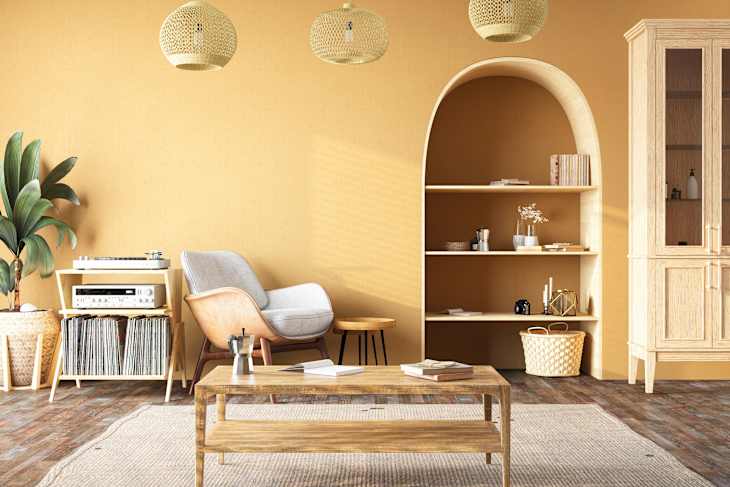
In recent years, butter yellow had its time to shine. The soft shade washed over kitchen cabinetry, living room furniture, and nursery walls. No wonder! Homeowners gravitated towards warmer tones after years of cool grays dominating interiors. But all that goes up must come down: Design pros are saying that the hue’s reign is waning. The reason why isn’t necessarily due to aesthetics, but rather, real estate realities at play.
Architect-turned-interior designer Anh Ly, founder and CEO of Mim Concept, explains why the color surged in the first place: “Butter yellow had a magic moment because it felt optimistic and comforting, especially during a time when people were craving warmth at home.”

Now, that emotional pull is also what’s working against it. “It fell short on resale since it’s a very emotion-specific color. Buyers tend to see it as personal rather than neutral, which makes it harder for them to imagine themselves in the space,” Ly adds.
Increasingly, buyers are reacting negatively to butter yellow — not because warmth is out, but because they insist on flexibility. Designers believe prospective homeowners still want cozy spaces, just in colors that won’t require repainting or an immediate renovation upon moving in. A for-sale home’s palette plays a serious role in how easily buyers can imagine their own furniture, art, and style fitting into the space.
Barrett Oswald, an interior designer based in Larchmont, New York, says the reaction is often immediate. “Yellow is a love-it-or-hate-it color. Some people are all in, and others can’t get past it.”
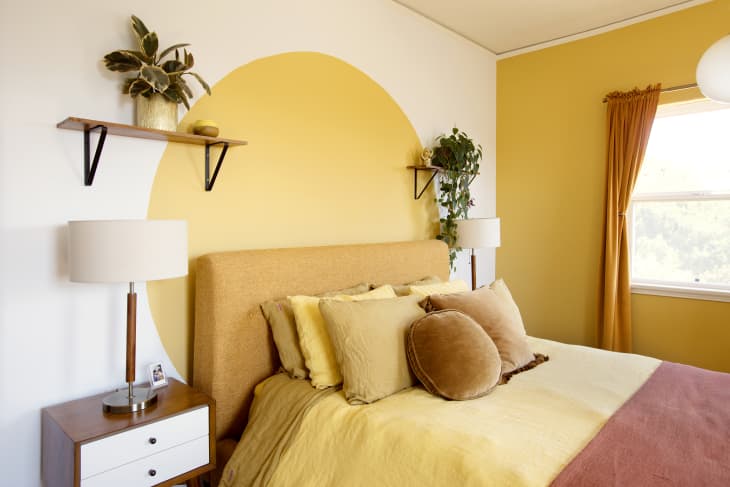
Why Butter Yellow Can Be Problematic in the Long Run
According to a recent 2025 Zillow survey, real estate professionals report that yellow kitchens and red bedrooms had the potential to reduce a home’s sale price by upwards of $4,000. Agents are firm that hues like butter yellow can hurt resale value in a market where prospective buyers are in the driver’s seat.
Interior designer Krista Shugars, founder of Maryland-based KD Designs Custom Interiors, says the trendy hue carries a negative connotation for some. “Butter yellow walls can be beautiful when executed well. However, the color may be perceived negatively, as it can come across as looking dirty or dingy to some; others may associate it with the now-dated Tuscan era or country-style decor,” she explains.
That perception directly affects buyer behavior during showings and open houses. “Prospective homebuyers typically want to walk into an open house and easily visualize themselves and their existing furnishings fitting seamlessly into the home,” Shugars says. “For many, butter yellow can be a difficult color to sell compared with warm neutrals.”
Oswald says the issue ultimately comes down to personalization. Butter yellow “is a very specific color, and for most people it’s hard to picture their own style wrapped entirely in it, which is why it tends to shine more as an accent than a main player,” she adds.
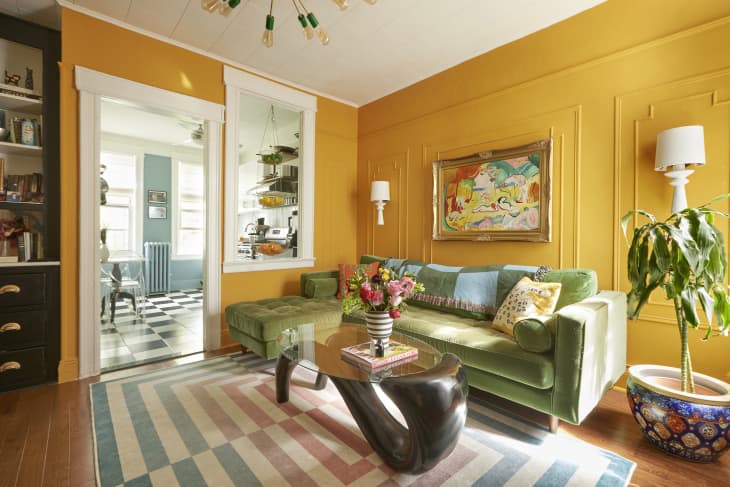
What’s Replacing Butter Yellow in 2026
Don’t worry: There won’t be a return to the all-gray-everything look synonymous with the 2010s. Instead, as designers highlighted in Apartment Therapy’s 2026 State of Home Design survey, there’s a shift toward warmer, quieter palettes that feel inviting for homeowners while still appealing to a broad range of buyers. Buyers still want a cozy feel, just not in a defining color.
“Warm neutrals are far more flexible when pairing complementary colors throughout the design,” Shugars says. Rather than centering a room around one dominant shade, designers suggest layering materials and tones — woods, stone, and creams — to achieve a comforting look without locking buyers into a specific aesthetic.

How to Do Butter Yellow Right
Designers aren’t saying butter yellow is dead and gone. It’s simply evolving!
“Butter yellow 2.0 is about restraint and placement,” Ly says. “I love using it in smaller, intentional ways: a ceramic table lamp, stitched piping on upholstery, or artwork with warm undertones. When paired with modern silhouettes and natural materials, it reads fresh instead of nostalgic. The key to success is letting it act as a supporting character, not the main star.”
Ultimately, the color works best when it’s easy to change. Stick to swap-friendly decor (like pillows, artwork, and dish towels) instead of more permanent choices, such as bathroom or backsplash tile.
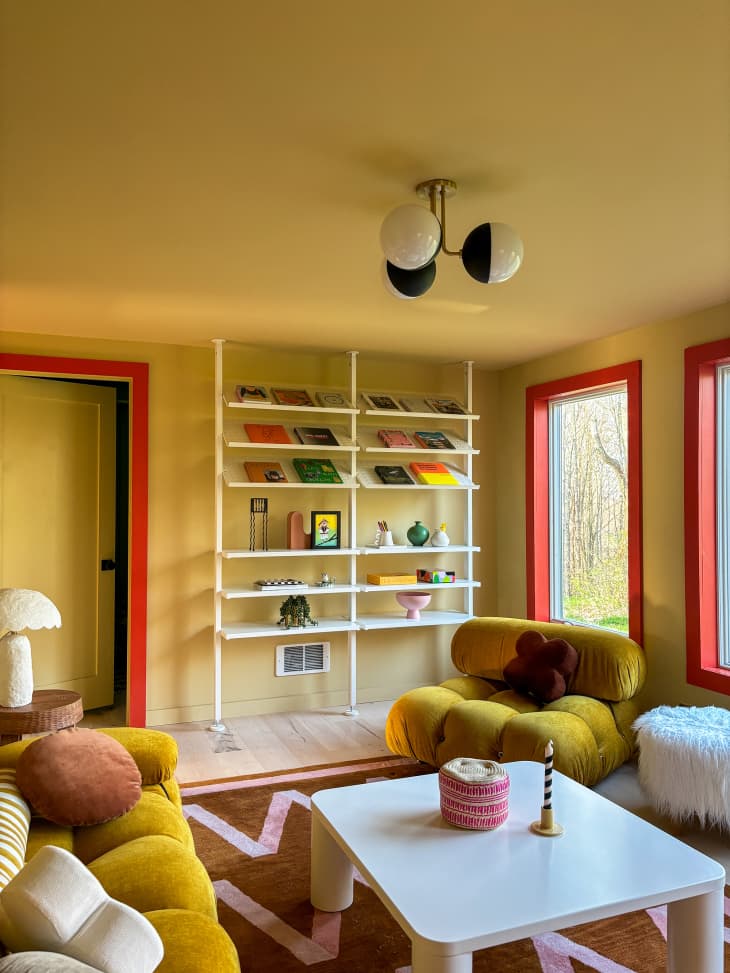
Shugars says certain rooms should still embrace the shade. “Sunrooms and nurseries are perfect spaces for butter yellow walls.” She also prefers softer applications, incorporating butter yellow through accent pillows, throw blankets, and bedding.
Butter yellow isn’t disappearing, but it is downsizing. Now it functions more like an accessory instead of a foundation. When used thoughtfully and sparingly, butter yellow can still bring warmth and vibrancy to a space without overwhelming it.
As Shugars says, “Is any color ever really ‘out’? If you love it, use it.”
Design Defined
Never miss the style inspo and recommendations you crave with Design Defined. Follow along each week as our Home Director Danielle shares the best style advice, latest trends, and popular decor finds you just can't miss.