
How to Bring Craftsman Interior Design into a Historic Home, According to Designers
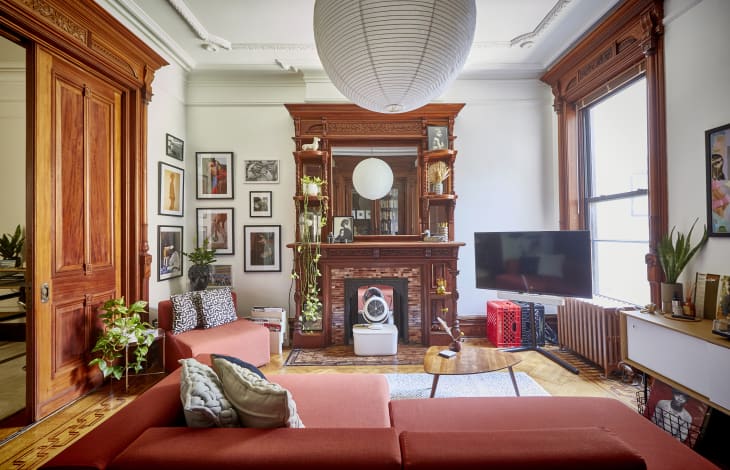
Design movements are often in response to what has come before — and Craftsman interior design is one of the most clear examples of this cyclical nature at play. While the Victorian design of the late 19th century believed in more is more when it came to ornamentation and formality, Craftsman interiors focused on a return to simplicity, nature, and, well, craftsmanship.
“Craftsman style is essentially a rejection of all the Rococo style, the neoclassical, the over-the-top opulence of the 1920s. In the 1930s and 1940s, the Craftsman style houses used wood and showed the wood grain,” says Colleen Bennett, founder and principal designer of North Carolina-based CBB Design Firm.

The core tenets of craftsman interior design hinge on highlighting the richness of materials, including the natural color and grain of wood, by letting the clean lines and skilled woodworking speak for themselves. There’s no need for dousing a beautiful piece of wood in paint when the material itself is warm and welcoming.
Craftsman interior design shows off the process (not just the finished product!) by displaying the structural elements and joinery as works of art. And all of this occurs within a natural, earthy palette that connects this interior style to nature.
When Did Craftsman Interiors Become Popular?
In 1901, furniture designer Gustav Stickley released the first issue of The Craftsman, and a titular design and architecture movement was born. He left behind the heavy ornamentation, formal styling, and intricate design of the Victorian movement, and pushed design toward a simpler, back-to-nature philosophy.
The Arts and Crafts era in American design brought both Craftsman-style architecture and interiors to the forefront, particularly in areas like California, Chicago, the Pacific Northwest, and small towns throughout the South. Taking cues from other styles, including Japanese architecture and the English Arts and Crafts movement, which began roughly 40 years earlier, this Craftsman approach emphasized simple, straight lines, a focus on handcrafted elements, and a preference for natural materials like wood and stone.
Throughout the early 20th century, from roughly 1900 to 1930, Craftsman design and architecture remained a dominant style in the United States, in all sizes (bungalows included!) and across multiple echelons of society. And, while the Craftsman movement gave way to mid-century design, modern design, and other eras that followed, there’s always been an undercurrent of its core principles defining the way many designers and architects think about “good” design.
“Craftsman never really goes away. It has always been there,” Bennett explains. “Truly, when you’re looking at it, the George Nakashima knots and people wanting more simple styles — Craftsman is always there.”
Luke Olson, principal at GTM Architects based in Washington, D.C., echoes that it’s not that Craftsman design went away and came back. It’s that the style’s principles resonate on a deeper level with design enthusiasts.
“There has been a push to use more stained wood cabinetry, natural materials, and earthy color palettes in homes as a response to the minimalist, austere interiors of the past 15 years — disparagingly summarized as ‘millennial gray,’” he explains.
Olson adds that he’s also seeing a shift toward more custom, handmade finishes and details. These are reminiscent of the skilled craftsmanship of the original craftsman movement and a stark contrast to the mass-produced, big-box design that has been the default for several generations. Today, you may see styles that take cues from Craftsman interior design without using that name.
“The Japandi style has a similar focus on natural materials, high-quality wood workmanship and the Scandinavian concept of Hygge, or coziness and comfort,” he says. “The recent revival of mid-century modern architecture also adopts similar concepts.”
10 Common Craftsman Interior Design Traits
Craftsman interior design is as much about the philosophy behind the design as it is the look itself. Originally, it was a rejection of the overly ornate design of earlier eras; today, it’s about a return to simple, quality materials and a connection to nature.
Detailed Woodworking and Custom Elements
You’ll often find beautifully rich wood built-ins nestled into Craftsman-style rooms. Whether it’s built-in glass cabinets in a dining room or bookcases flanking a fireplace, these elements show off both the craftsmanship and an emphasis on the natural grain of the wood.
“Inspired by the Arts and Crafts movement and traditional Japanese woodworking, Craftsman style architecture focuses on high-quality workmanship featuring detailed woodworking and custom built-ins,” Olson explains.
Manual Techniques
Like its name might imply, Craftsman interior design places a focus on the craft behind the architecture and interiors. This isn’t fast design — it’s design meant to last. Bennett explains: “In the Craftsman style, you typically were working with cherries; with deep orange colors, with joinery techniques like dowels instead of nails and glue. There are a lot of old-school techniques used to put furniture together.”
Connection to Nature and Natural Materials
Craftsman interior design puts a connection to nature at the center of its material choices. Every material chosen is designed to connect the space to the outdoors, including touches like natural stone. The materials get to show off their natural state rather than be subjected to paint or other treatments.
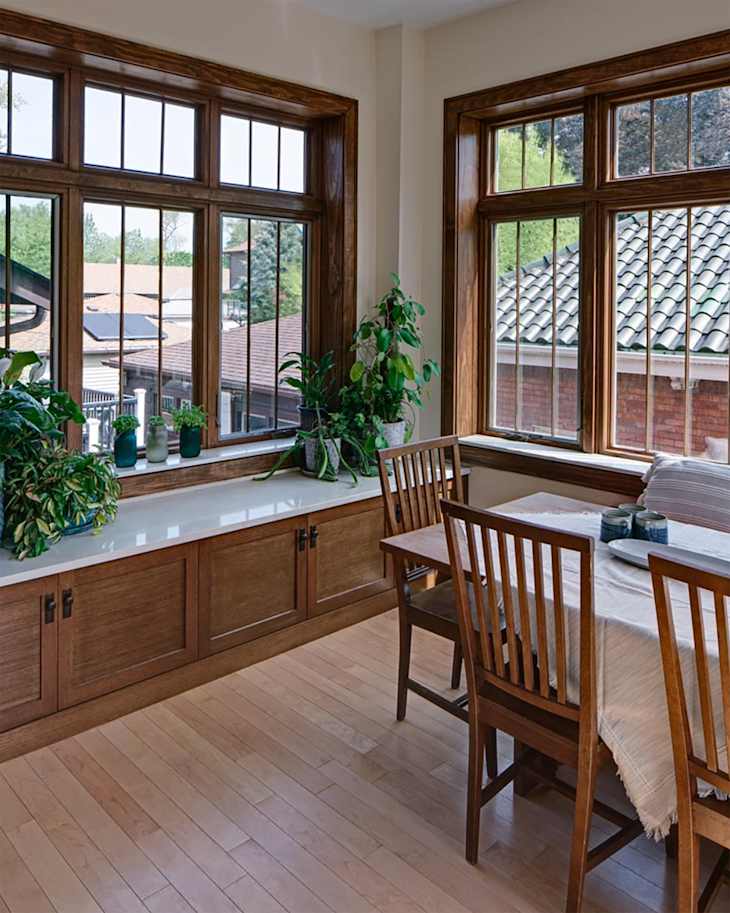
“Rather than covering up materials, Craftsman interiors celebrate them,” says Samantha Schoell, designer at Drury Design in Illinois. “I see this displayed in homes through furniture, kitchen cabinetry, and trim that highlight the beauty of natural wood grain. The choice to stain rather than paint allows the wood grain to shine through.”
Clean Lines
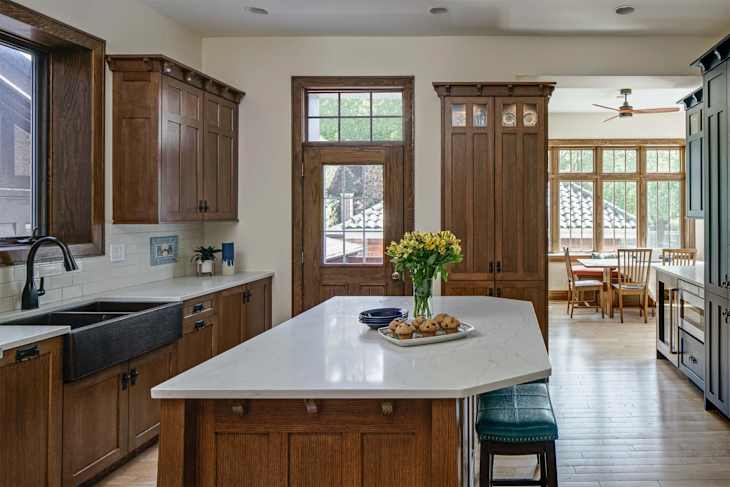
Typically, Craftsman details illustrate amazing woodwork — but they don’t overwhelm interiors with ornate detail or intricate carvings. Instead, the natural grain of the wood speaks for itself, from the hardwood floors to wood trim and molding to built-in elements. “It is about expressing the beauty of the wood and clean lines,” Bennett says.
Earthy Color Palettes
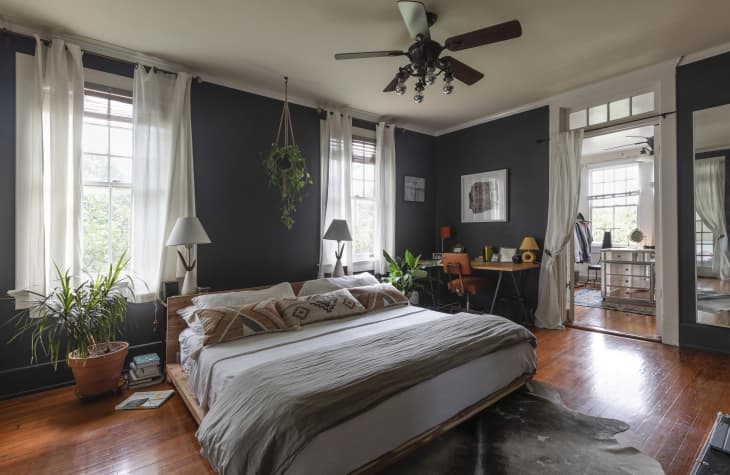
Craftsman interiors do not typically aim to create a high-contrast look. Instead, they play with the color palettes that already exist in nature. “To complement the wood tones, Craftsman interiors often embrace an earthy, nature-inspired color palette. Deep olive green and burgundy go beautifully with natural wood,” Schoell says.

Visible Structural Elements
Where they might be hidden within drywall in other homes, you’ll often see beams and other architectural elements showcased in a Craftsman-style home. This is intentionally done to show off the artistry behind the construction.
“The woodworking is often designed to showcase rather than hide the structural elements of the house and the various joinery details used to connect the individual elements together into a harmonious whole,” Olson adds.
Humble Scales
High ceilings and grand staircases can create an impressive sense of scale, but Craftsman homes shy away from anything that would make a person feel small inside.
Instead, lower ceilings and adequate rooms feel scaled to the way people actually live in a space. Olson explains: “Bungalows were the most common house type to utilize Craftsman style, with a more horizontal massing utilizing lower ceilings and smaller rooms to create a sense of comfort and coziness.”
Fireplaces Galore
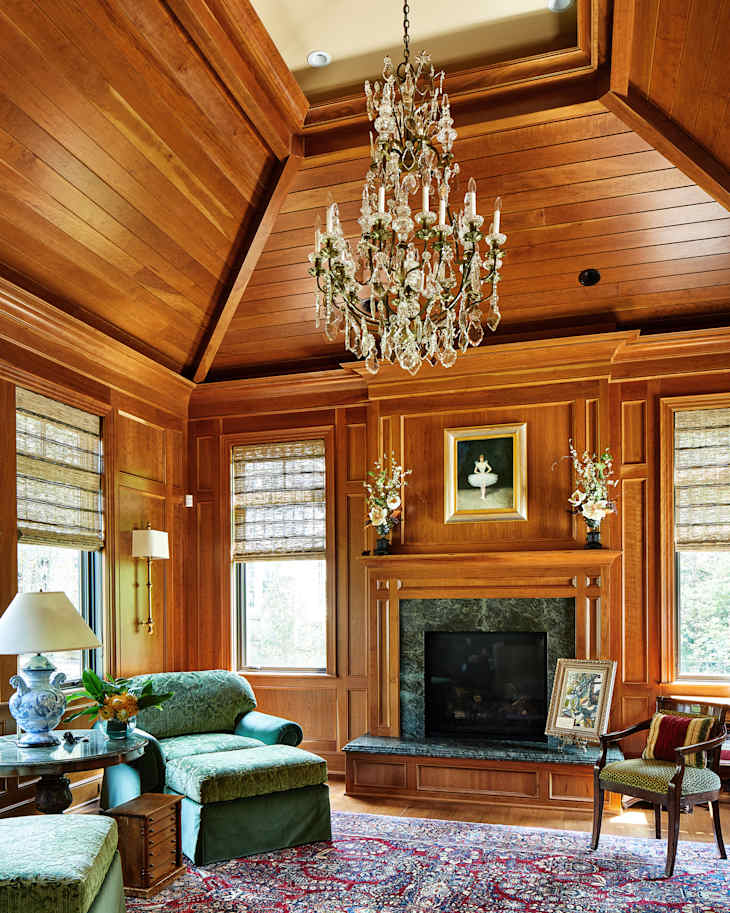
Craftsman interiors tend to feature separate rooms in favor of open floor plans, and the most important room is the living room. Olson notes that living rooms in Craftsman homes often have a focus on a central fireplace. You might find built-ins or bench seating on either side of the hearth.
Focus on Simplicity
“While more simplistic in details and finishes compared to previous styles, the details in Craftsman design are intentional and of a higher quality, often handmade for a more custom feel,” Olson says.
Craftsman homes don’t overwhelm a space with bold maximalism and detail. Instead, the warmth and richness of design come from the materials themselves.

Nature-Inspired Patterns
While the woodwork may be simple and the colors earthy, that doesn’t mean Craftsman homes shy away from all ornamentation. You’ll see vintage-inspired patterns that feature both geometric and organic designs — don’t forget, the Arts and Crafts movement was the era of William Morris.
“In a more recent Craftsman kitchen project I worked on, a handcrafted backsplash tile became the showpiece,” explains Schoell, referencing the detail pictured above. “The tile featured motifs of birds, fish, and other natural patterns. These touches are what give Craftsman interiors their timeless and natural beauty feel.”
7 Ways to Incorporate Craftsman Interior Design Into Your Home
Craftsman’s warm, cozy ambience stems from its emphasis on wood, natural materials, and human-level scale. And while that is often seen in homes that were built during its heyday in the early 20th century, it’s also replicated in modern homes.
Build Integrated Wood Built-Ins
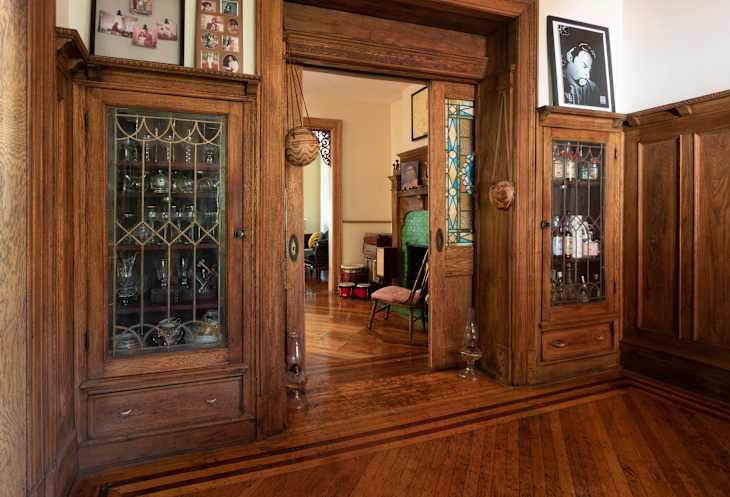
These built-ins within a historic New York City brownstone are completely integrated into the room with detailing on the trim that flows perfectly from cabinetry to molding. The glass detail adds another moment of craftsmanship without tipping into ornate territory.
Choose Natural Wood Tones
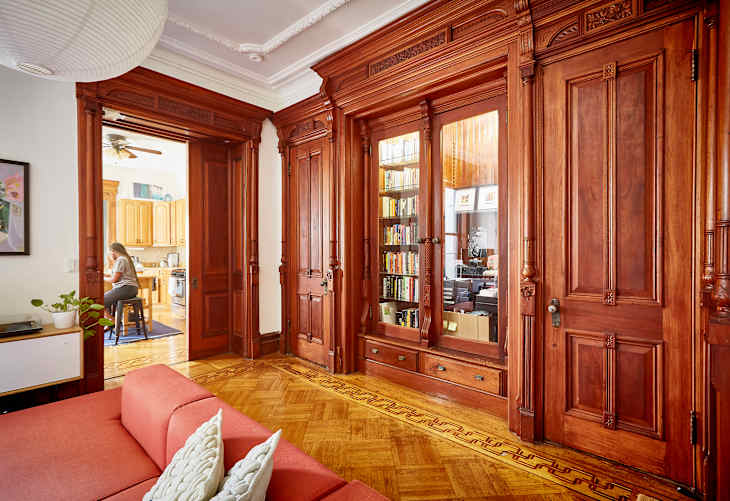
Some wood has a naturally orange tone, and it’s celebrated in spaces like this formal Craftsman living room within this historic Brooklyn brownstone. The rich woodworking illustrates the true color and grain of the wood rather than hiding it with paint, or a stain that would alter its natural look.
Focus on Simple Woodworking
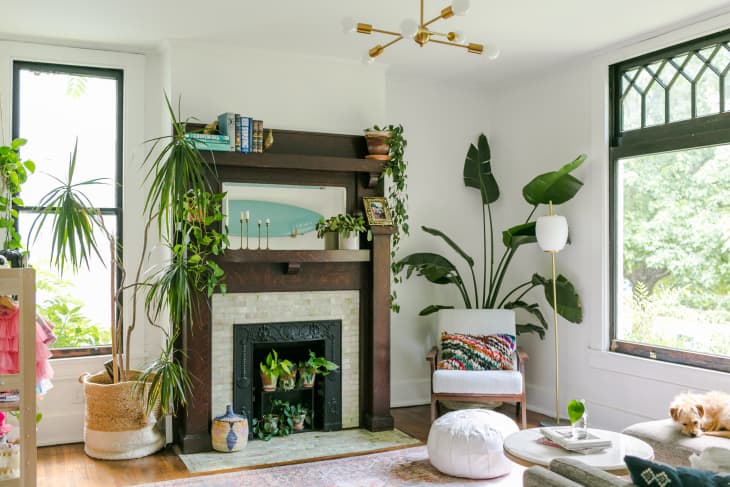
The simple lines of this Craftsman-style fireplace are a perfect pairing with tile that has a pastel yet earthy palette. There’s no extra ornamentation; it’s all about the quality materials and craftsmanship in this renovated Nashville home.
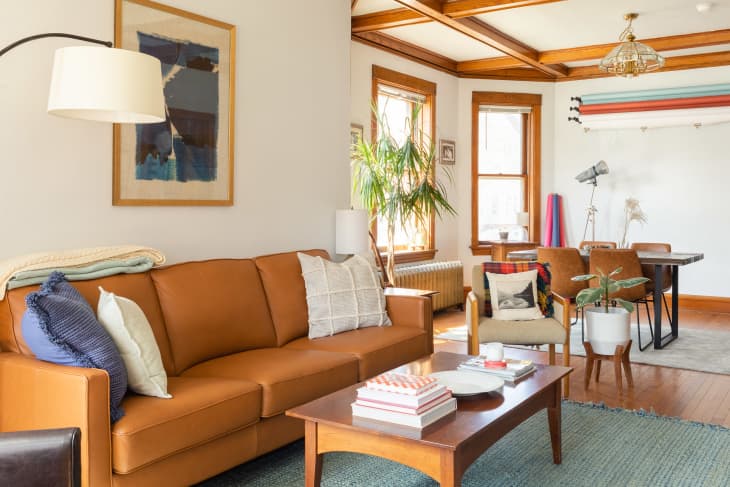
Put Structural Elements on Display
Craftsman interior design uses structural elements to add detail. The exposed woodworking on the coffered ceiling in this Chicago home embraces its ceiling beams, adding warmth while also bringing down the scale of the ceiling.
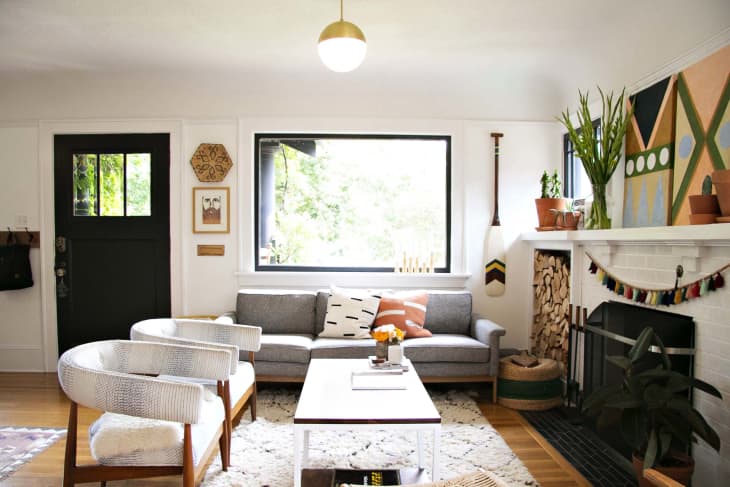
Put Your Fireplace in the Spotlight
Entering a Craftsman-style home through the living room is a common layout feature — and it puts the fireplace at the heart of a true Craftsman. There are often built-in elements flanking the fireplace, and this Portland, Oregon, hearth has a place to store extra wood.
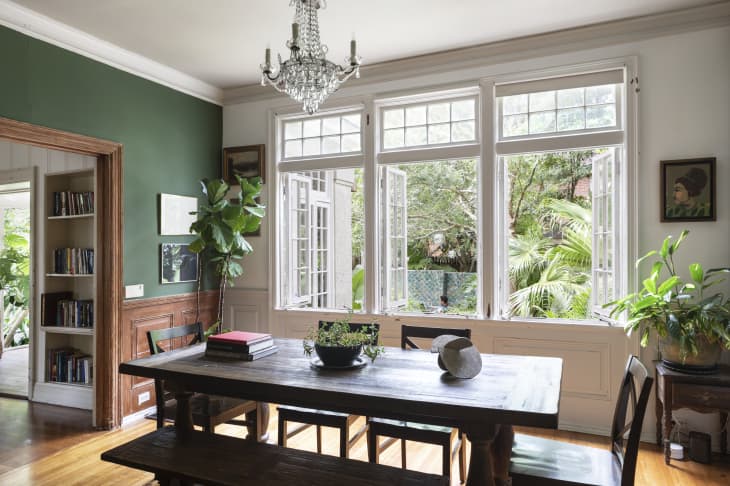
Use Nature-Inspired Colors
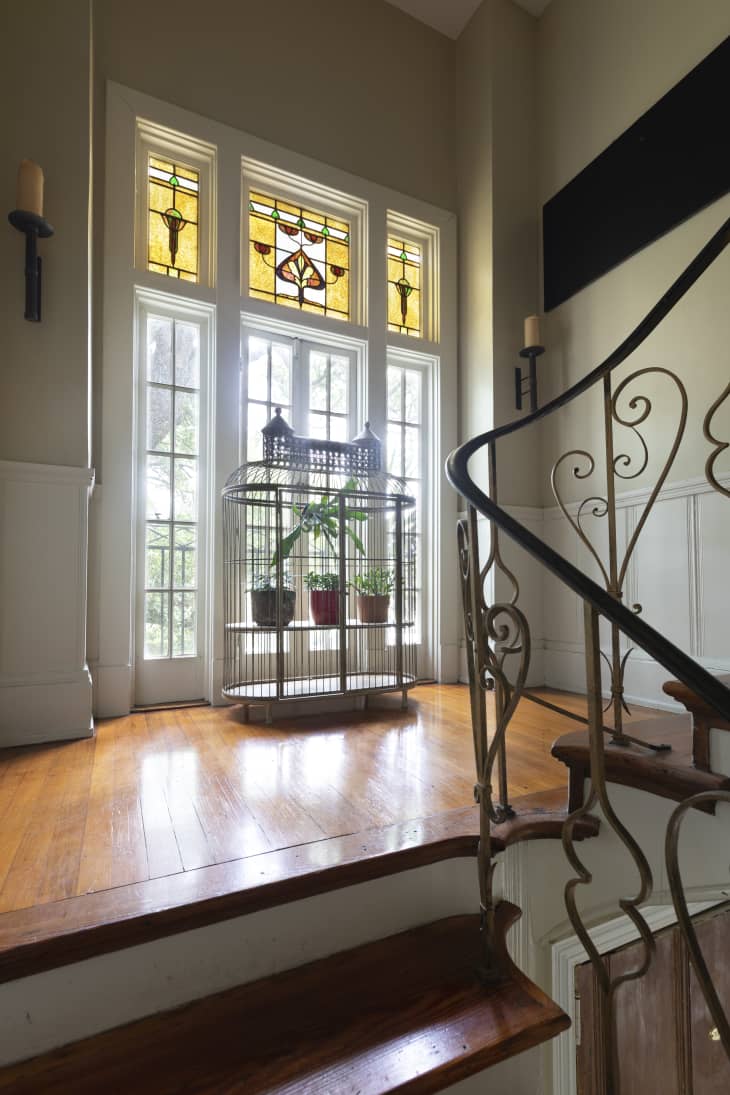
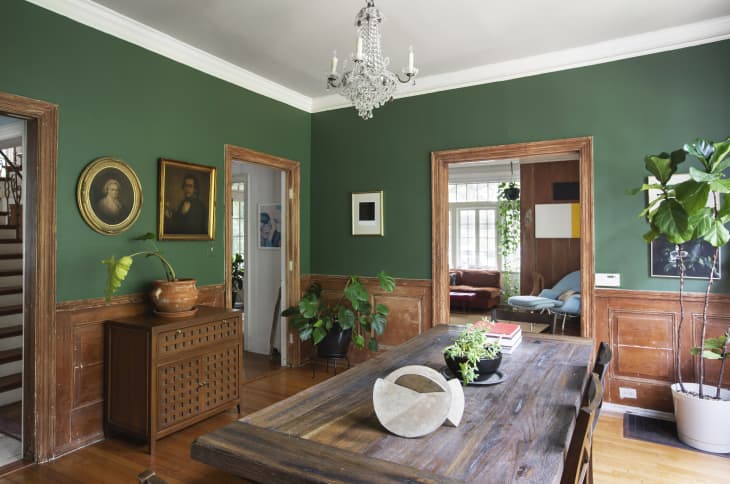
There’s often a connection between inside and out in craftsman interior design, and the lush green of this dining room in a New Orleans historic apartment is right at home amid all the wood tones, from the millwork to its simple dining table.
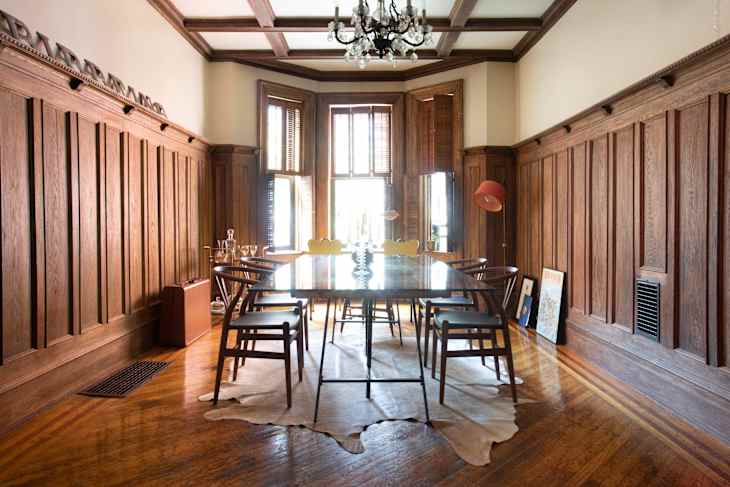
Opt for a Natural Wood Stain
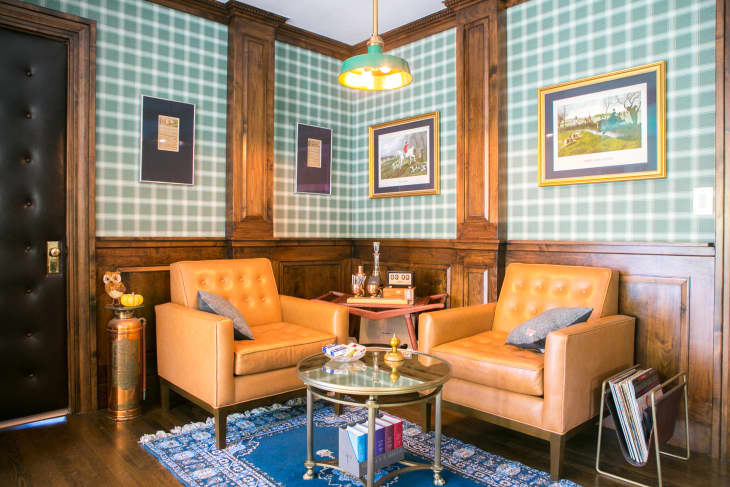
This dining room is giving academic vibes; it’s a nod to the rich layers of wood that are a signature of Craftsman interior design. There are clean yet skillfully crafted lines to highlight beautiful wood, and a natural stain that lets the grain shine through.
Design Defined
Never miss the style inspo and recommendations you crave with Design Defined. Follow along each week as our Home Director Danielle shares the best style advice, latest trends, and popular decor finds you just can't miss.