
English Kitchens Are Trending Majorly Thanks to 3 Key Design Details
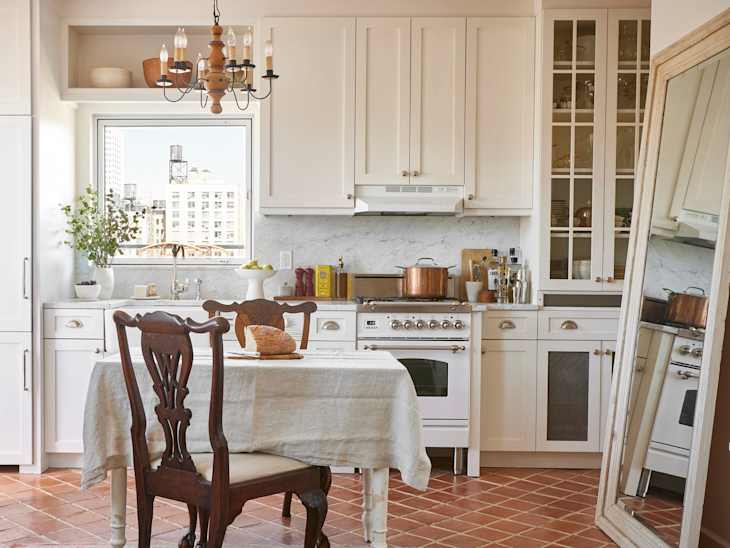
Whether you’re just a fan of The Great British Baking Show or consider yourself a full-blown Anglophile, there’s something undeniably charming about an English-style kitchen. Maybe it’s the cozy sense of warmth they possess? Or the lived-in feel that encourages handmade meals and lingering conversation over a cup of coffee (okay, tea). Whatever the draw, there’s no escaping the fact that there’s an English kitchen revival in full swing across the pond here in America.
Over the past few years, designers have seen personality and color become priorities in home design in a major way. So it makes sense that an appreciation for English-style kitchens is just the next step in that evolution.

“English-style kitchens have a timelessness that makes it feel as if the kitchen has always been there, in the best way possible,” explains designer Annabelle Moehlmann. “I think many styles of kitchen can feel too specific to a moment in time. I’m always a fan of styles that one never tires of, and that don’t put a timestamp on when they were first done.”
Be the first to hear about new design trends in our Design Defined newsletter — plus, decor finds you just can’t miss.

Why Are English Kitchens Trending Now?
Beyond their aesthetic value, English-style kitchens are becoming more popular in interiors across the globe for another reason. The special sauce that makes an English-style kitchen so unique? Their ability to strike a balance between old-world charm and everyday practicality.
Don’t worry — they still possess plenty of beautiful finishes, like timeworn metals, saturated colors, and natural stone. But behind the visual allure is also a functional ethos. These kitchens are built for actual living — you know, the kind that involves flour-dusted countertops, a crisp glass of white wine, and a kettle that’s always on.
“The British style appeals to those who want a kitchen that is classic and built to last rather than being fashionable and considered to be disposable,” says Merlin Wright, design director at Plain English. “Our approach is to make a kitchen that looks timeless, that can be added to over time or refreshed with a lick of paint. This is unlike modern kitchens with plastic finishes, which tend to date and deteriorate rather than improve with age.”

The Key Design Elements of an English Kitchen
Characterized by bespoke joinery, freestanding pieces, and a collected feel, English-style kitchens don’t scream designed so much as they whisper well-loved. “We are very happy with the way people are now looking for simpler, humbler, and more authentic-looking kitchens,” says Helen Parker, creative director of deVOL, a brand largely responsible for pioneering that signature Brit-chic look both across the pond and here in the United States.

Take one look at a deVOL kitchen or Plain English kitchen, and it’s not hard to notice this difference — both in the functionality of the space but also within its layout. There’s no instinct to cram cabinetry from wall to wall or have everything fitted and tailored to perfection. Rather, these effortless spaces offer a bit of room for evolution, lending the feeling that they’ve come about over time, even if they truly are brand-new.
“English kitchens often include a mix of fitted and freestanding recessed panel cabinetry, as well as touches that add a relaxed coziness, like open shelving, a skirted counter, or a glass-fronted cabinet that allows you to admire the contents of its interior,” says Moehlmann, who designed her own Manhattan kitchen using Plain English cabinetry.
How to Get the English Kitchen Look
Incorporating well-loved heirlooms or antique pieces is also a hallmark of a British kitchen — and a strategy that can add instant patina to the space.
“At Plain English, we might explore a semifitted plan to include a mixture of fitted and free-standing elements, which allows us to incorporate an existing dresser or family table,” explains Wright. “We avoid color trends and often use contrasting colors or tones on different joinery items. We also like using materials that improve with use and time, such as stone, timber, and hand-painted finishes.”

If you’re looking to mimic an English look in an upcoming kitchen renovation, interior designer Alexander Wilson recommends starting with an audit of your kitchen to clarify both its functionality and flow.
“Start by creating a hierarchy of space within the kitchen by designating specific areas for prep, cooking, and my personal favorite, the scullery or butler’s pantry,” he suggests. “There is something so very British about a room whose sole purpose is the storage of collections of china, silver, and other such serving pieces.” The other key piece of advice focuses on the primary color of the space; if you only follow one rule, it shouldn’t be washed in a single color alone. “I would avoid a stark white kitchen and lean towards traditional millwork with detailed and thoughtful joinery,” Wilson adds. “Plus, a rich but muted color palette, and beautiful unlacquered brass hardware that will patina over time.”