
Living in a 354-Square-Foot Home Changed My Life — And Not in the Way I Expected
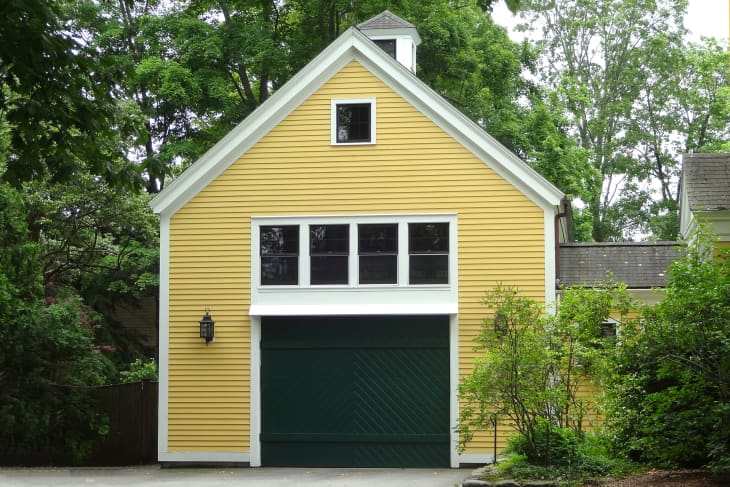
When I moved into my micro-apartment in Irving, Texas, I was making $31,000 a year and couldn’t afford much. The rent was $775 a month, utilities included. My previous place had been more than three times the size — 1,200 square feet — with two closets, a full kitchen, and even a library nook. But after my roommate got married, I was left to cobble together income from bartending and underpaid freelance gigs — and downsizing to a tiny home became survival.
So I moved. I called my new small apartment “the Treehouse.” It was just 354 square feet. It was a loft that sat above a carport, beside the branches of a beautiful old tree, and I liked that part. It felt like mine. But what followed in the year I lived there was a crash course in what it really means to live small — and what you absolutely need to let go of if you’re going to make it work.

Clutter Piles Up Quickly in Small Spaces
I moved in with too much stuff. That’s the truth. I went from a two-bedroom house with shared spaces to one open room where the bed, the barstools, the closet, and the kitchen all collided, and I held on to too much stuff for too long. And because I didn’t put anything in storage, every square inch had to work overtime.
There were shelves in every corner, and clutter ruled the space. For the first four or five months, I didn’t have steady work. No financial cushion, no clear career plan — just piles of stuff, growing mildew under a leaky wall unit I didn’t realize was dripping until it was too late.
The biggest lesson? If what you own doesn’t serve you daily, it’s a liability. I clung to furniture I should have donated. I kept clothes I hadn’t worn in years. I held on to a completely unnecessary vanity because I was scared to let go.
There was no “later pile.” Clutter builds fast. One bag on the floor, one dish in the sink, and the whole place felt off-balance. Tidying became a constant, not a weekend, task.
Hosting Was Harder in a Small Space
Tiny apartments don’t lend themselves well to hosting, and mine definitely didn’t. My tiny home space was an open studio — when you entered the space you walked straight into the kitchen which had a small island, and then opened up into the shared living and sleeping space. For guests, I had a pouf, a desk chair, and the bed. Everything else was usually covered in mail or laundry. My now-husband and I once tried to do a date-night painting session on the floor. It was sweet, but it also screamed this is all we’ve got.

But There Was Good, Too
Living alone gave me a kind of freedom I didn’t know I needed. I could sleep all day, dance in my pajamas, blast music at 1 a.m., cry in the kitchen. No one cared. I screamed during late-night gaming seshes. I rearranged furniture just because I felt like it.
But living in a “tiny home” magnified that freedom in so many unexpected ways. With less space, every decision I made about decorating, organizing, and decluttering felt bigger. There wasn’t any room to ignore my habits.
I loved the granite countertops and the gas stove, sure, but it was the forced downsizing that changed my mindset to something more intentional. The bathroom was so small I had to streamline everything — no more backup bottles or “just in case” clutter. Even rearranging furniture felt a bit like redesigning the whole space.
Living small has a way of reflecting your choices and priorities more clearly. You can’t hide your messes — physical or otherwise — in closets or cabinets. And I needed that clarity.
The best parts weren’t aesthetic. They were emotional. I needed that time alone in a space that demanded intention with every square inch.

What I’d Do Differently
I thought living above a carport would keep bugs away, because I was living well above ground but without tenants underneath me. It didn’t. I had to treat the entire exterior myself to get rid of them. I’d ask for pest control before signing the lease because I had to do so much pest control myself.
I’d clarify how utilities are managed — some apartments require you to pay for pest control, or manage your own HVAC system. From managing condensation to learning what my space could and couldn’t handle seasonally, I often became my own landlord, handyman, and HVAC tech — whether I meant to or not.
Seasons were more challenging in the tiny home. My windows faced west, so the space baked in summer. In winter, condensation made my bedding damp. The rainbow window film helped, but it also blocked the view I loved. I was located on top of the parking as well as the only hookups for a washer and dryer on the property. That meant hauling clothes up and down a flight of open-sided stairs in Texas heat, and often ended up with something falling out of a basket or my pocket.
Most importantly, I’d focus on budgeting more — while I was paying lower rent, and utilities were included, I was struggling financially overall because I was living on a low income. Living small is only freeing if you’re not drowning financially. I thought simplifying my space would simplify my life, but where you live is just one piece of the puzzle, and the financial chaos I was experiencing came with me.
I’d get rid of half my stuff before moving in. It wasn’t just about square footage, but about how I managed everything inside it. Less space to hide things made it abundantly clear how much “mess” I literally had in my life. Downsizing didn’t fix my finances, but it clarified what needed more attention — confronting the bad habits I’d been ignoring like buying things I thought I needed for an ideal world I couldn’t afford to live in. For anyone assuming a smaller home is the answer to big money problems, know this: Living “small” can be the fastest way to living bigger and better for your budget, but only if you’re ready to make hard decisions about what you own, and what you’re ready to let go of.
I don’t regret it, but I would never do it that way again.

So, Would I Go Micro Again?
Maybe. If I had privacy, insulation, and a savings cushion. In a tiny home, there’s no escaping some annoyances — noise, temperature swings, clutter. Less space heightens your awareness of every leak and smell. I had to deal, too, with firehouse sirens, neighbors who accidentally cut my power, and 2 a.m. weekday parties next door.
Living with less can be healing — but only if you’re ready. I wasn’t. But I carried the lessons that I learned from that year living in the tiny home forward — namely, that it’s OK to let things go, and that investing in storage is always important. In my current 970-square-foot two-bedroom apartment that I share with my husband, there’s a wall of cube storage shelves dedicated to most of our library collection, and I finally did let go of that vanity.
Small-space living taught me how to be more intentional — not just about what I have, but how I live. I’ve learned to stop and think before buying, to think in terms of function and flow over aesthetics. Now I care more about how a room feels than how it looks. Merging two lives would have been even easier if we’d both decluttered beforehand, but now we both know that space doesn’t keep you organized — systems do.