
I Tried the “Inconvenient Method” of Decluttering, and It Was 100% Successful
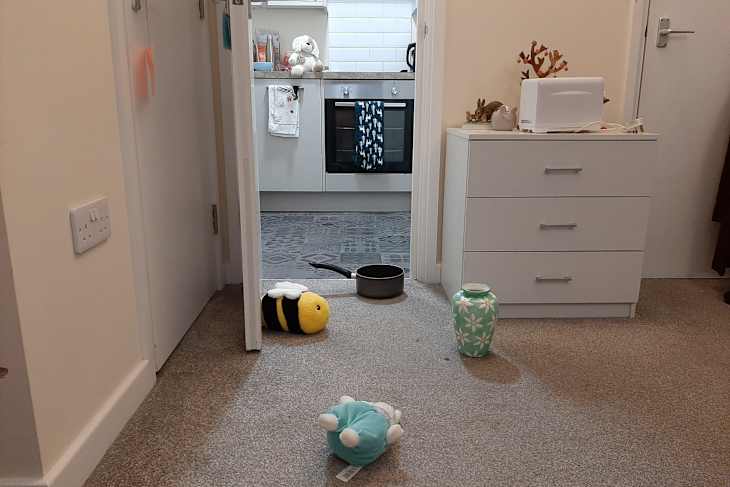
Anyone who knows me knows how much I dislike random clutter being strewn on the floor. It just irks me — it looks so out of place, and it’s a trip hazard. So when I was discussing decluttering methods with Linda Samuels, professional organizer and owner of Oh, So Organized!, and the conversation turned to the pros and cons of the “inconvenient method” of decluttering I honestly detested the idea of doing it.
It’s a method that claims to be amazing at culling your “maybes” — and maybes are definitely something that I struggle to let go of. I decided to give the inconvenient method of decluttering a go. And as much as I didn’t enjoy making my home feel more cluttered in order to declutter, the method proved itself to be highly effective.
What Is the Inconvenient Method of Decluttering?
The inconvenient method of decluttering is all about placing items you’re on the fence about in inconvenient spaces so you’re forced to confront their existence on a frequent basis. That sweater you attempt to donate every decluttering session but hold onto just in case? Fold it up neatly and place it in the middle of your living room floor. The mug that you like but find to be an incredibly difficult shape to actually drink from? Place it in front of the door of your entryway so every time you leave the house you have to move it.
The method claims to be effective, as it reminds you that these “maybes” take up space in your home as well as energy to maintain. These factors, in combination with how inconvenient the items become as you go about your day to day, encourage your brain to come to a yes or no decision — either deciding the item isn’t worth keeping around, or reminding you why you liked the item in the first place.
“The core concept of this method is to heighten awareness of clutter that necessitates action and attention by intentionally creating disruption and discomfort,” shares Samuels. “Make sure to place items somewhere clearly in your line of sight or somewhere that will create a notable disruption to provoke a better response within your thought processes.”

What Happened When I Tried the Inconvenient Method
The part I was dreading was finally here. I took out my “maybe box,” where I keep together any items left over from past decluttering sessions, and began placing things around my home. As I did this I paid particular attention to placing items where they least made sense, but still where they were safe (I didn’t cram a cushion in the oven). For instance, the plate I was debating letting go of seemed more out of place on my living room floor than on a kitchen counter, but a stuffed animal on my kitchen counter seemed suitably odd.
If your home is already rather cluttered (which is totally OK; many people have been there!) or if you struggle with clutter blindness I’d recommend cleaning an area up first before trying this out, as the method works best when it’s easy to see items that look out of place.
Then, from there, I resumed living my daily life. I wasn’t sure at first how long to leave the items out for, but after a couple of days when I felt my brain naturally making decisions about some of the items I decided the best way for me to approach the method was to remove items one by one when decisions were formed.
If working with a set duration is something that works better for you, though, Samuels recommends that “the optimal time frame will likely fall somewhere between two days and two weeks. The ideal duration for this experiment depends on the time available for editing and the level of disruption you can handle.”
What’s the Verdict?
As much as I didn’t like doing this method, it was undeniably impactful. Seeing the items I normally keep tucked away every day in an inconvenient area made me confront how much I cared about or needed each thing in the first place, loosening the sense of attachment I held towards my “stuff” and helping me to donate or trash items (if necessary, like in the case of my saucepan that looked horrendous on the inside). But on the flip side, in the case of a couple of items, doing the inconvenient method of decluttering showed me how much I like having certain things around and why I was perhaps reluctant to let them go in the first place.
I’d for sure recommend this method of slow decluttering to anyone looking for a little pare-down session. However, if you’re hoping to cut down on a lot of clutter quickly, this method might not align with your goals.