
What Is a Fainting Couch? Why Designers Are Loving This Classic Style Again
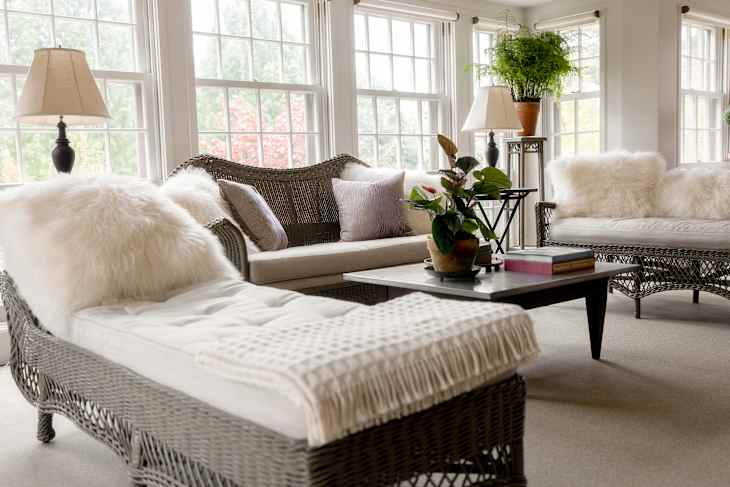
I always tell my friends: If I’m standing, I’m probably thinking about how I’d rather be sitting. And if I’m sitting, I’m actually thinking about lying down. Hence why I love a good lounge chair, a cozy chaise, or a daybed. Not only do they tend to make a statement and add some serious visual intrigue to your space, but they’re also often the perfect spot for reading and napping.
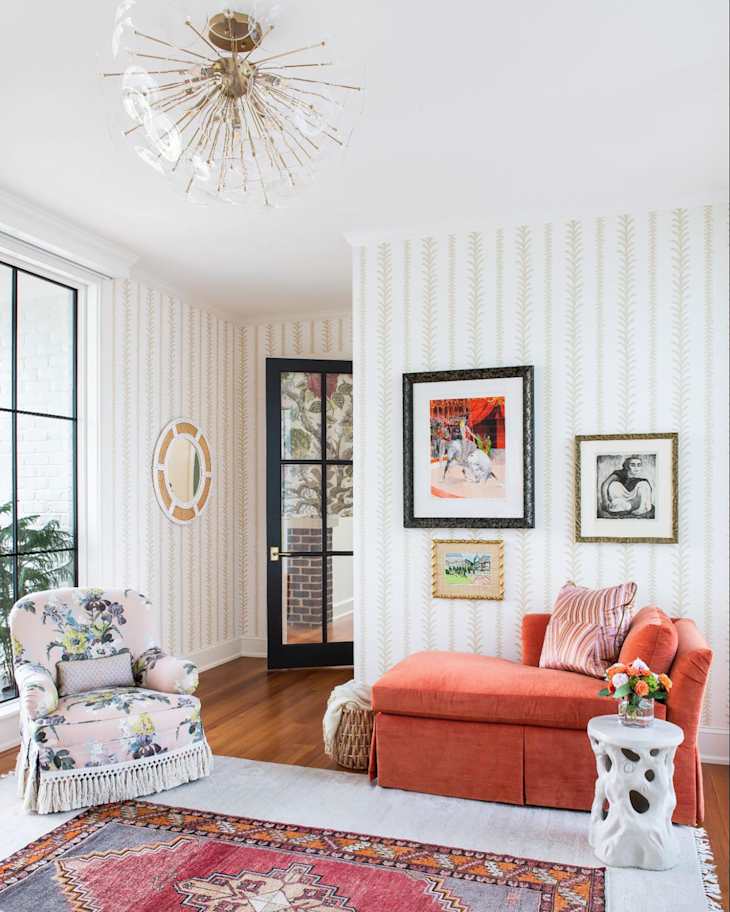

When I was growing up, I had some of the best naps of my life on what my parents called a “chaise” lounger. It wasn’t until recently that I realized, however, that this “chaise” was in fact something different. In my search for similar pieces, I came to realize that my nap chair was like a mermaid of the furniture world — half sofa, half chaise, and wholly magical, comfortable, and chic. It was then I learned that my elusive, mythical “nap chair” was actually a “fainting couch.”

What Exactly Is a Fainting Couch?
I was fascinated by the fainting couch, so I set out to learn more about what sets it apart from other loungers — and why they were created in the first place. I spoke with both design historians and modern designers to uncover how these special furniture pieces were used then, and why they’re being reintroduced now.
Isabel Jackson, principal designer and owner of Maryland-based firm Chelt Interiors, says designers look for a particular attribute in a fainting couch: “Unlike the symmetrical daybed or the elongated chaise, the fainting couch is typically defined by a raised, single-arm backrest on one side, offering an asymmetrical silhouette that feels both intimate and indulgent,” Jackson explains.
Having peaked in popularity during the Victorian era, these particular gorgeous silhouettes were often found in ladies’ bedrooms — but were also “a staple in Victorian parlors,” according to Jackson.
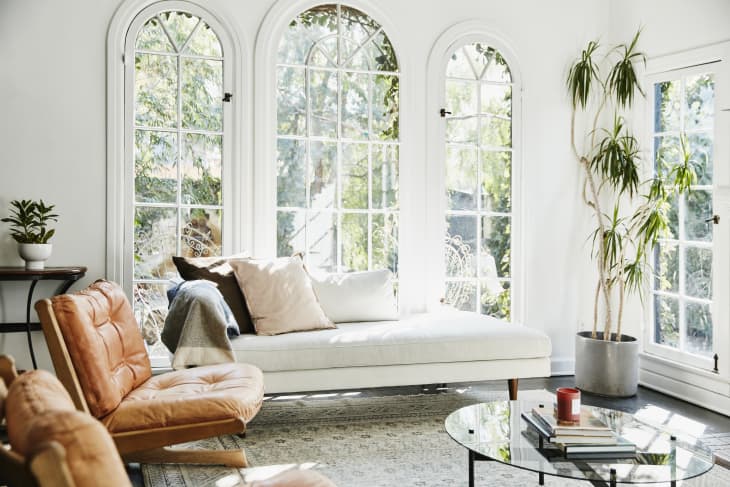
It’s commonly thought that fainting couches were used for, well, fainting. For the women of antiquity, tight corsets made it hard to breathe (and even harder to lie down). But Lina Forrester, designer and archivist at home furnishings company Kravet, says there’s more to the story: “In Victorian households, once a lady’s bed was made up by staff for the day, it wasn’t considered proper to lounge or read in it,” she explains. So the fainting couch provided a place to rest without messing up the bed — a more socially acceptable form of “bed rotting.”
Despite its original purpose being somewhat obsolete, the antique pieces’ gorgeous and ornate design has serious staying power in today’s market. “We’re seeing a growing appetite for character and storytelling. The fainting couch answers both: It’s sculptural, romantic, and layered with meaning,” Jackson adds.
The History of the Fainting Couch
Pieces like the fainting couch can, indeed, tell us a lot — not just about what was “trending” or “fashionable” in the past, but also about how people actually lived and used their homes. Both Forrester and Jackson have some thoughts about the likeliest, most common uses of the piece, as well as its origins.
Although commonly attributed to the maximalist styles of the Victorian era, the fainting couch only reached the height of its popularity at that time. The silhouette originated long before then. “The fainting couch has its roots with the Ancient Egyptians and the Greeks,” Jackson says, adding, “where the well-heeled ruling classes spent large chunks of time lounging, eating, and drinking, as did the Romans later on.”
Many surviving pieces from the height of the fainting couch’s popularity in the Victorian era feature ornate woodwork and fanciful scrolled arms — but most important was the upholstery. “The [fainting couch’s] upholstery fabric was often elaborate and sumptuous,” Forrester shares. “Damasks, brocades, velvets that were chosen not just for comfort, but as an overt symbol of refinement and status (think: Bertha Russell in The Gilded Age!).”
Similar to the ball gowns that were the height of fashion during the period, the actual fabric the piece was made from signified degrees of wealth and taste to the owner’s peers. “A handwoven silk damask fainting couch, for example, would have instantly distinguished its owner as someone who understood fashion and luxury,” Forrester explains.

Which Fainting Couch Styles Are Trending Now?
How have these funky furniture pieces remained relevant beyond the era of the corset — and outlasted the taboo of napping in bed?
“In a world moving away from soulless, mass-produced furniture […] the fainting couch offers an antidote: a handcrafted, often bespoke item that slows down a space,” Jackson says. “It invites pause … something [that is] increasingly rare in our digital age.”
In other words, the fainting couch has endured as a symbol of self-care in the modern era. But if you love the idea and the symbol of the fainting couch, the task of actually styling a piece like that in a modern-day home could feel daunting.
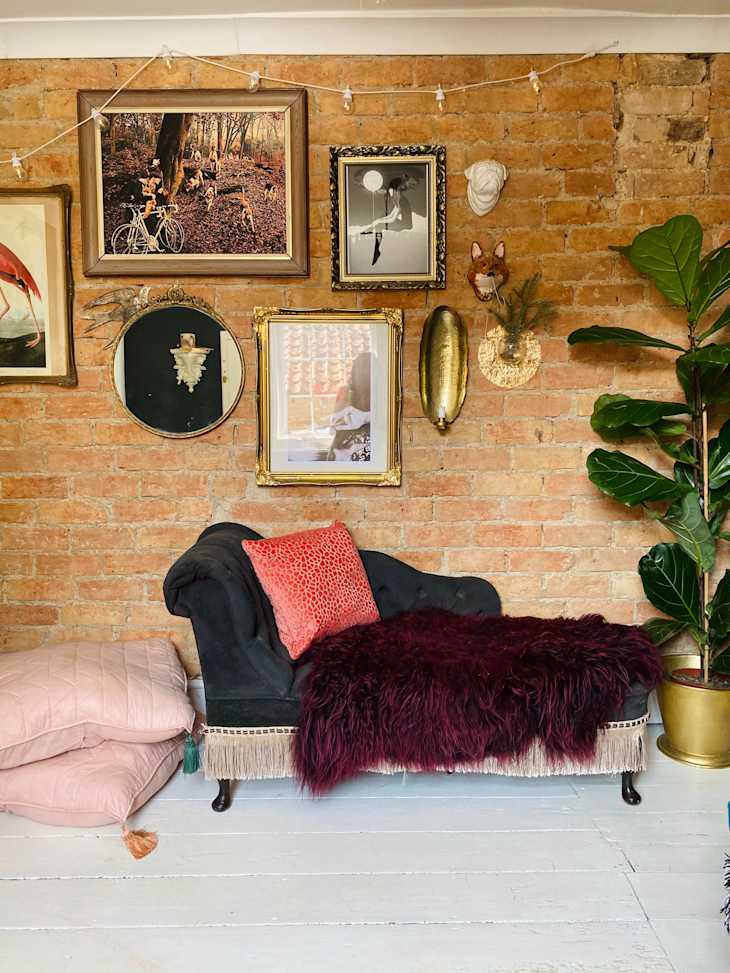
Forrester suggests making the fainting couch a focal point: “I love when fainting couches are treated as sexy sculptural conversation starters,” she says. “They become works of art when upholstered in an unexpected textile like a bold linen stripe, a gem-colored mohair velvet, or even a contemporary printed cotton.”
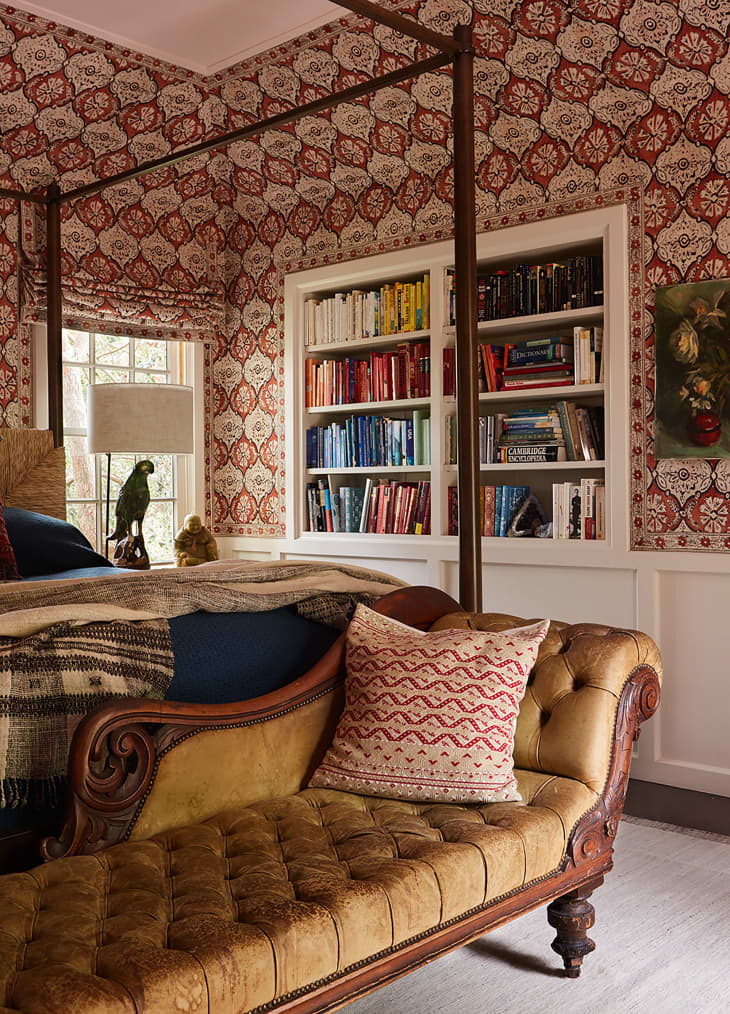
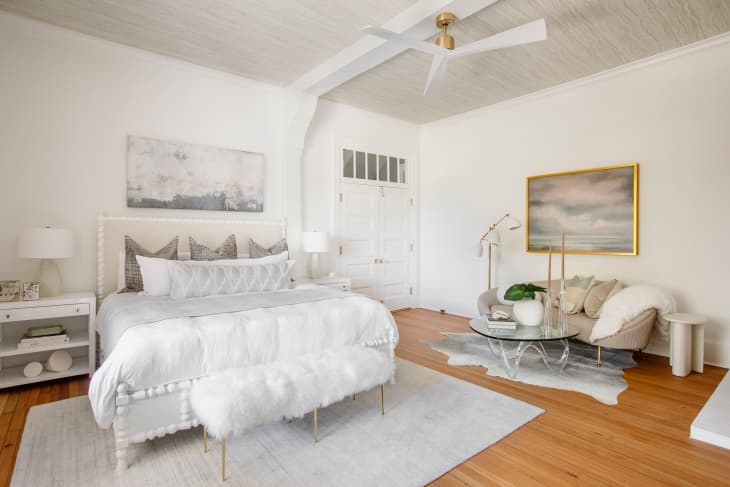
Don’t feel like you have to style your fainting couch the same way the Victorians did. Jackson suggests you go with your gut, and be mindful of how you plan to actually use the piece: “Position [it] where function meets beauty — at the end of a bed, under a window, or floating in a living room corner with a side table and lamp. It can be more than decorative; it’s a perfect space for reading, sipping tea, or enjoying quiet contemplation.”
If the piece still feels out of place in your home, “surround it with complementary elements,” Jackson adds. “Antique paintings, modern sculptures, layered rugs. The couch becomes a bridge between eras, not a standalone relic.”
Stylish Modern Fainting Couches to Shop Now
Antique pieces are not the only options available, either. Fainting couches are still in production — and now available in a wide variety of designs to fit any home.
“Contemporary designers are embracing the form,” Jackson says. “Brands like Kelly Wearstler and RH have produced sculptural loungers that borrow the single-arm profile, while artisans and vintage dealers are restoring original 19th-century pieces for a new generation.” Contemporary designs lean into the unexpected, with unusual proportions and silhouettes that put a distinctively modern twist onto the classic piece.
From traditional styles to those more modern interpretations, check out a few of our favorite fainting couches on the market today. You don’t have to have a Victorian brownstone to make a fainting couch look at home in your space.


How to Source a Vintage Fainting Couch
If you’re a history buff, secondhand shopper, or antique collector (or, like me, all of the above), maybe you’re hoping to source a historically accurate fainting couch. Where should you start, you may wonder?
Oftentimes, you might be able to find such pieces on Facebook Marketplace. Online secondhand furniture retailers like Chairish, 1st Dibs, and AptDeco have a pretty reliable collection of fainting couches available. Genuine antiques tend to be on the pricier side, but these are pieces you’ll likely enjoy for a lifetime.
Vintage pieces may need to be reupholstered, but the frames will last for generations if properly cared for. A bright or modern fabric could help blend the new piece into your home more seamlessly; it would also be a fun call-back to the history of these pieces, or a cool contrast to the historical details of the frame’s design.
Sources I spoke with are excited about the return of the fainting couch; they even describe it as one of their favorite pieces to use in their designs. “The fainting couch is more than a passing trend — it’s a revival of a deeply romantic, thoughtfully crafted piece that carries historical gravitas and modern potential,” Jackson says. “For those of us passionate about blending eras with integrity, it’s a design moment worth celebrating.”
Design Defined
Never miss the style inspo and recommendations you crave with Design Defined. Follow along each week as our Home Director Danielle shares the best style advice, latest trends, and popular decor finds you just can't miss.