
How to Skillfully Combine Multiple Rugs in a Room
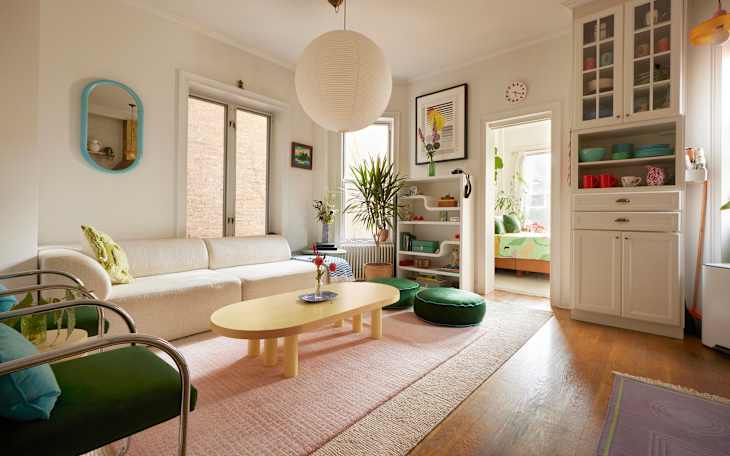
An open floor plan can have great appeal — the lack of walls generally results in a better flow and allows natural light to shine through. However, since the eye is taking in a lot of square footage all at once, you have to be a bit more thoughtful about your furniture and decor, especially the area rugs. Next to wall color, flooring is the most dominant visual element in a space, simply because of its size. When you have an open floor plan with more than one zone, such as a dining and living area, multiple rugs can help define each space.

So, how do you incorporate more than one rug in the same room (or do something truly tricky like layer a rug over carpet)? Good question! I reached out to designer Donna Mondi of Donna Mondi Interior Design for a crash course on how to combine rugs successfully.
Here are seven key points to keep in mind as you plan your space, including how to layer multiple rugs in a living room.
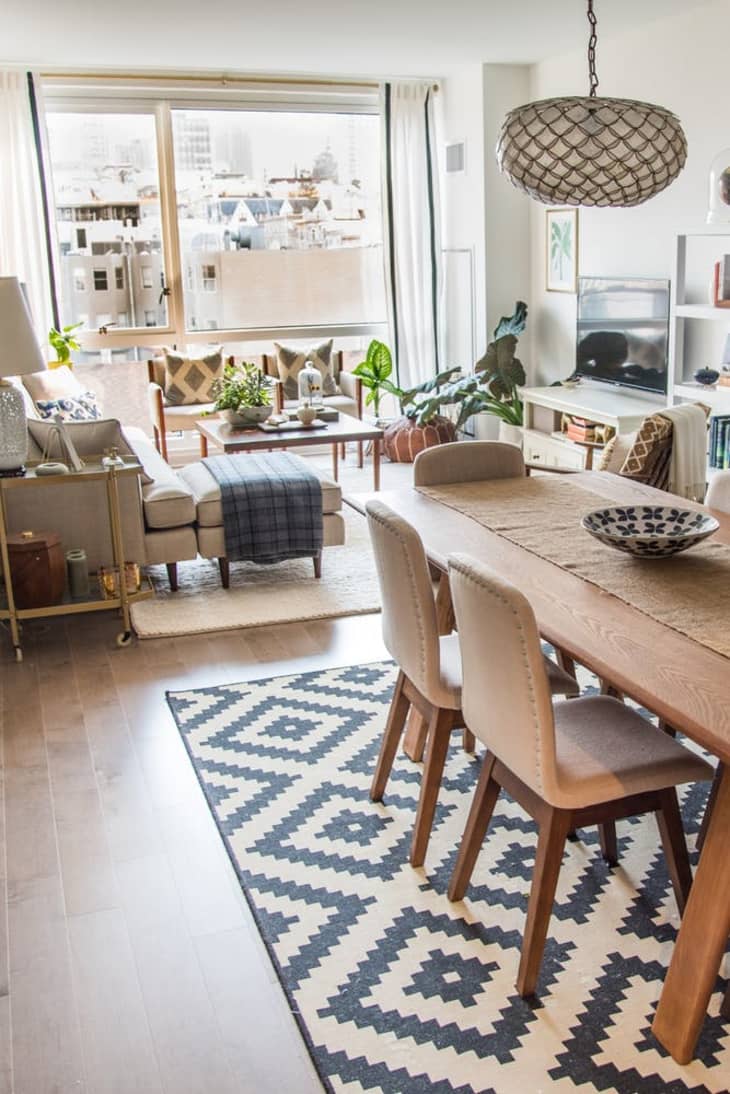
Create visual interest by mixing rugs with different textures.
Sure, you can go all matchy-matchy with your rugs, but Donna thinks that is actually tricky to pull off. In her opinion, it’s better to find complementary styles instead. “If one rug is patterned, maybe the other is more textural,” she says.
That appears to be the case in home decor buyer Jeni’s San Francisco apartment. She has a tan and black geometric diamond rug under her dining table and a braided rug grounding the sofa in her living space. This works because there’s a nice mix of textures between the two, and the neutral braided rug shares one of the colors of the diamond rug.
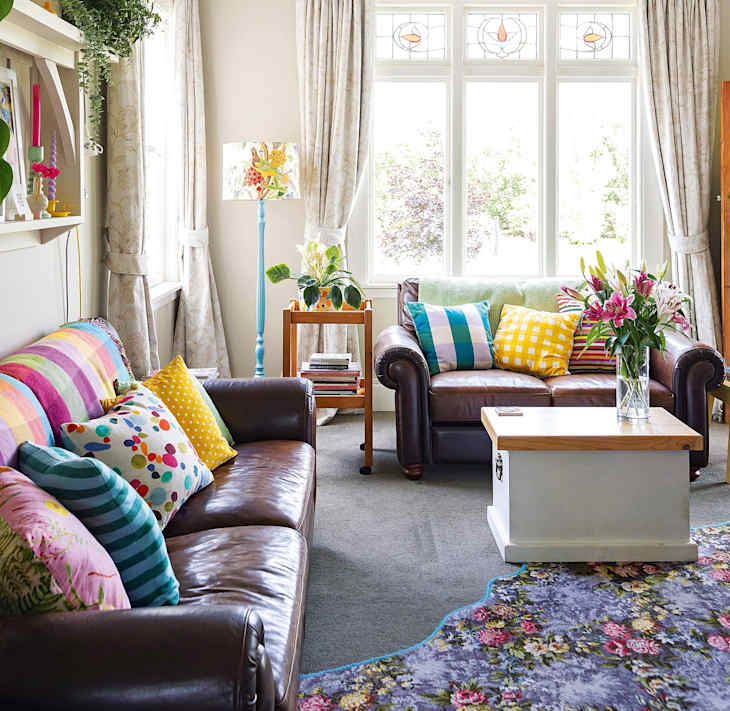
Source throw rugs with live edges.
Once all the rage with design pros who strove to push the envelope with a bit of shock factor, layering multiple rugs in a single space has become a quick way to elevate a living room or bedroom. If you’re thinking of stacking a throw rug on top of another or placing a rug atop carpeting, visually differentiating the layers can result in a nuanced look. In this eclectic New Zealand cottage, the vibrant colors of the romantic floral rug shown above already help set it apart from wall-to-wall carpeting.
But the atypical edge and shape of this rug help create a joyful feel in a beautifully maximalist color palette. Playing with varying sizes when layering rugs is a great visual trick — but take it a step further by sourcing a piece designed in asymmetry, as a delightful visual juxtaposition.
When in doubt, stick to rugs in the same color family.
“Having a common color cross between multiple rugs will help unify the space,” says Donna. That’s why the multi-rug situation in this Madrid home featured on Mi Casa works so well. In addition to the fact that each of the rug patterns is a different size, the colors are nearly the same. The Greek key rug is also a good match for the dot pattern. Again, it’s basically a solid, whereas the other rug is very busy, so they balance each other out.
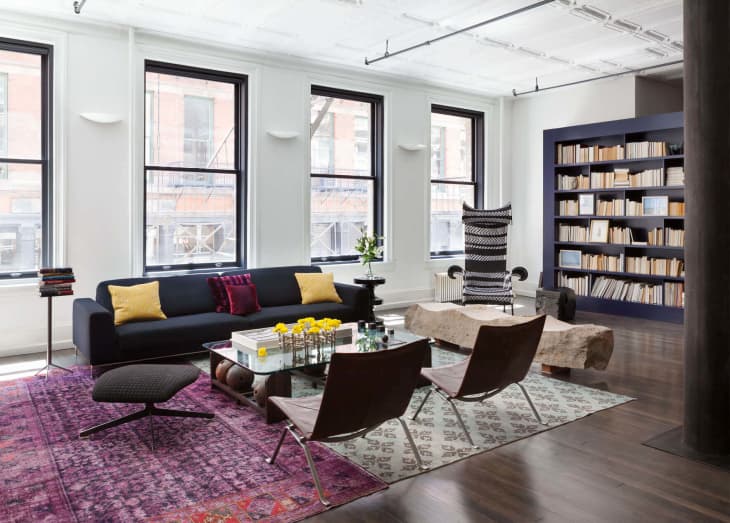
Double up with totally different styles if you want to make a statement.
For Donna, it’s very difficult to put two vastly different rugs side by side in a space, but she’d never say never. If you check out this NYC loft by DHD Architecture and Interior Design, you’ll see why. You definitely have to acknowledge the eclecticism this creates in a room, but it works. Just keep in mind that this is easier to pull off when you’ve got good bones to work with (original wood floors, large windows, lofty ceilings). Nice modern furniture doesn’t hurt, either.

Consider mixed media pairings.
In the same vein, pair rugs that clash in the best way — options that are made from vastly different source materials, as is the case in this Art Deco-style Los Angeles apartment. The short shag rug perfectly complements the geometric detail in the throw nestled beneath a statement chair in this glamorous living room.

Work the scale of patterned pieces.
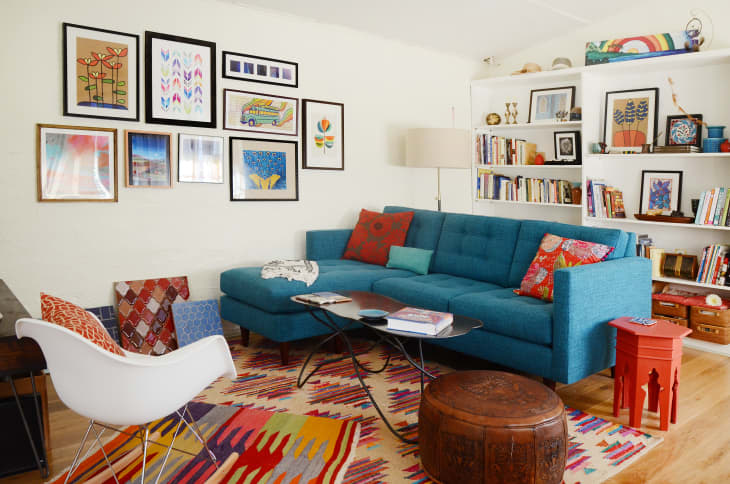
Or, according to Donna, you could also vary the patterns of multiple rugs in a room. “Try one that’s large-scaled, and the other could be a small print,” she says. That’s what’s going on in the living room of Celia Bernardo’s 100-Year-Old Spanish home. The larger rug, with the bigger pattern, grounds the seating area, while the smaller rug with the smaller pattern defines the walkway.
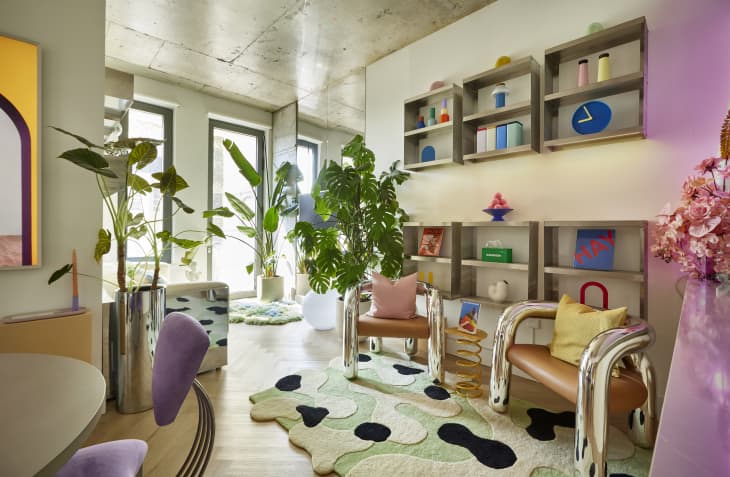
Don’t be afraid to bring a funky-shaped rug into the mix.
If your rugs are different shapes or sizes, Donna says this can add more interest and keep your floor coverings from competing with each other. You can see that going on in this colorful Bushwick apartment. It’s a bit of a maximalist setup, and the various rug options flaunting different shapes, sizes, and textures are a nod to the fun-loving, post-modern aesthetic.
How Do You Layer Multiple Rugs in a Living Room?
A fun way to incorporate multiple rugs in a living space is to layer them on top of each other. However, this decorating idea does require a little more thought than just selecting any two random rugs and calling it a day.
The first thing you want to do is select a larger base rug. This will help anchor and define the living room. Next, select a complementary rug to layer on top of it. Here are a few things to consider as you narrow down your options:
- Size: Select a rug that is at least two-thirds the size of your base rug, so it is clear that they are two distinct rugs. This will also ensure that the base rug’s border and/or pattern will be visible.
- Texture: Embrace different textures. If your base rug is sisal, consider going with a softer option on top.
- Color: When layering rugs, you can go in a few different directions with the color. You can either select rugs that are in the same color family for a more subtle approach. Or, opt for rugs in complementary shades, which would be more noticeable. It really comes down to your personal preference.
- Pattern: When it comes to pattern, you can go in a few different directions here as well. For instance, if the base rug has a large pattern, opt for a second rug in a small pattern. Or, consider having one rug with a pattern and one without. Another option is to layer multiple rugs with similar patterns. Again, it depends on your preference and the impact you want to make.